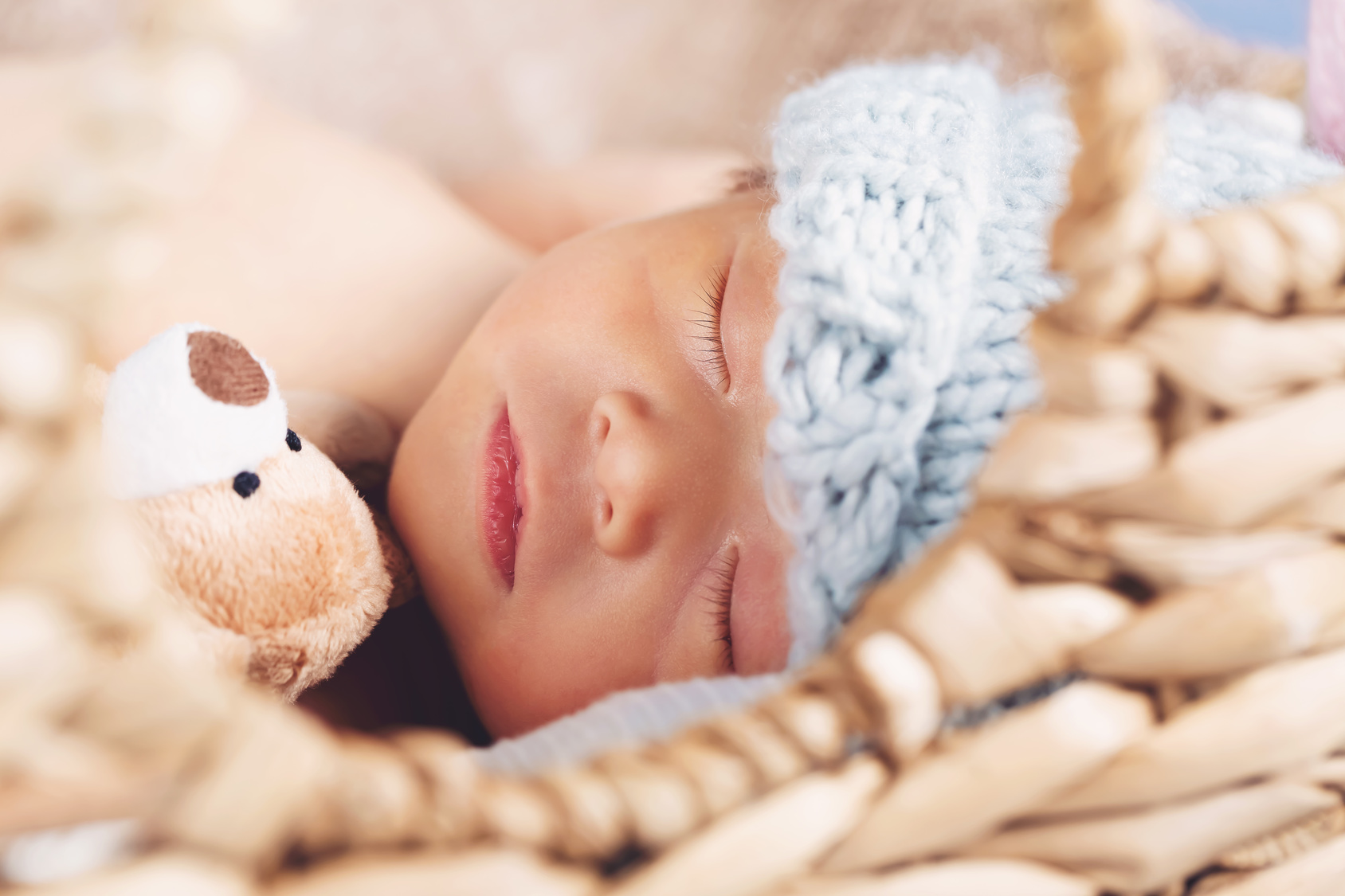
When you bring your newborn baby home, you will definitely have some sleepless nights. Most newborns typically spend at least 60 percent of their time asleep. They usually sleep when they are not feeding. Some remain active and alert for surprisingly long periods until you try various activities for baby sleep.
All babies are different and have different sleep requirements which depend on their individual physiology. Due to this reason, no rigid sleeping times should be laid down that correspond to the average baby.
If you have a very wakeful baby, you are privileged to have an eager and brighter child in the future. Be consoled by the fact that every minute he is awake he is learning something new!
The sleep pattern of a newborn is determined by his weight and the feeding needs. The less your baby weighs during the first weeks, more often he’ll need to be fed and the lesser time he’ll spend sleeping and vice versa.
All babies have their own sleeping pattern, this chart is a rough guide to sleep requirements according to the birth weight.
| Weight | No. of Feeds
per day |
Hours of Sleep
per day |
| 2kg (4lb) | 7-8 | 16 |
| 3kg (7lb) | 5-6 | 18 |
| 4.5kg (10lb) | 4-5 | 20 |
The only essentials for your baby sleep are comfortable clothes, nappies or diapers, and the feeding equipment (if not on breastfeed). But many parents really enjoy preparing the baby’s room and sleeping accessories according to their own lifestyle.
Initially, the best choice of bed for your baby is Moses basket or a Carrycot pram. Once your baby could outgrow the basket or carrycot, you’ll need a full-sized cot.
Sudden Infant Death Syndrome (SIDS) also known as ‘cot death’ is the sudden and unexpected death for no obvious reason. Parents can vastly reduce the risk of SIDS by following various safety measures. All sleeping equipment must comply with safety standards.
The temperature of the nursery and cot is an important factor as a young baby can’t regulate his body temperature effectively.
Use the number of blankets wisely. If the room is at 18o C, then a sheet and two layers of blankets are ideal when your baby is wearing a nappy, vest and a stretch suit. If the room is warmer, use fewer blankets. In summers, your baby might need only a sheet.
| Temperature | Bedding |
| 14o C (57oF) | Sheet and three or four layers of light blanket |
| 16o C (60oF) | Sheet and three layers of light blanket |
| 18o C (65oF) | Sheet and two layers of light blanket |
| 20o C (68oF) | Sheet and one layer of light blanket |
| 24o C (75oF) | Sheet only |
Do not use so many pillows around the baby’s head as babies lose heat through their heads. If a baby’s head is buried in a pillow, heat loss will be reduced and consequently the risk of overheating increases.
Several things are there to ensure that your baby settles down to sleep such as:
BabySoJao brings for you a solution to soothe your crying baby in just 30 seconds. BabySoJao Mattress is helpful for the older babies also to learn how to sleep alone.
Still, you might have more questions, visit the website to know how would the magic of this mattress work for you and your baby.
Have more information on baby sleep to add that worked for you and your baby? Please share with us your experience in the comments section below.
Disclaimer: The content contained in this article is for informational purposes only and not to be substituted for professional medical advice. Results may vary from person to person.
Toddler tantrums can test even the calmest parent. A child may cry, scream, kick, or…
Motherhood can fill every hour with chores, childcare, planning, and emotional support. Constant demands can…
Get everyone involved in a family outing, and it will be more memorable. Calgary has…
Teenage years can bring major emotional, social, and physical changes. Anger may become more noticeable…
Pack for three sessions, not for a weekend away. The bag that works is the…
Parents often feel frustrated when children ignore instructions. Repeated reminders can become exhausting. Understanding why…